
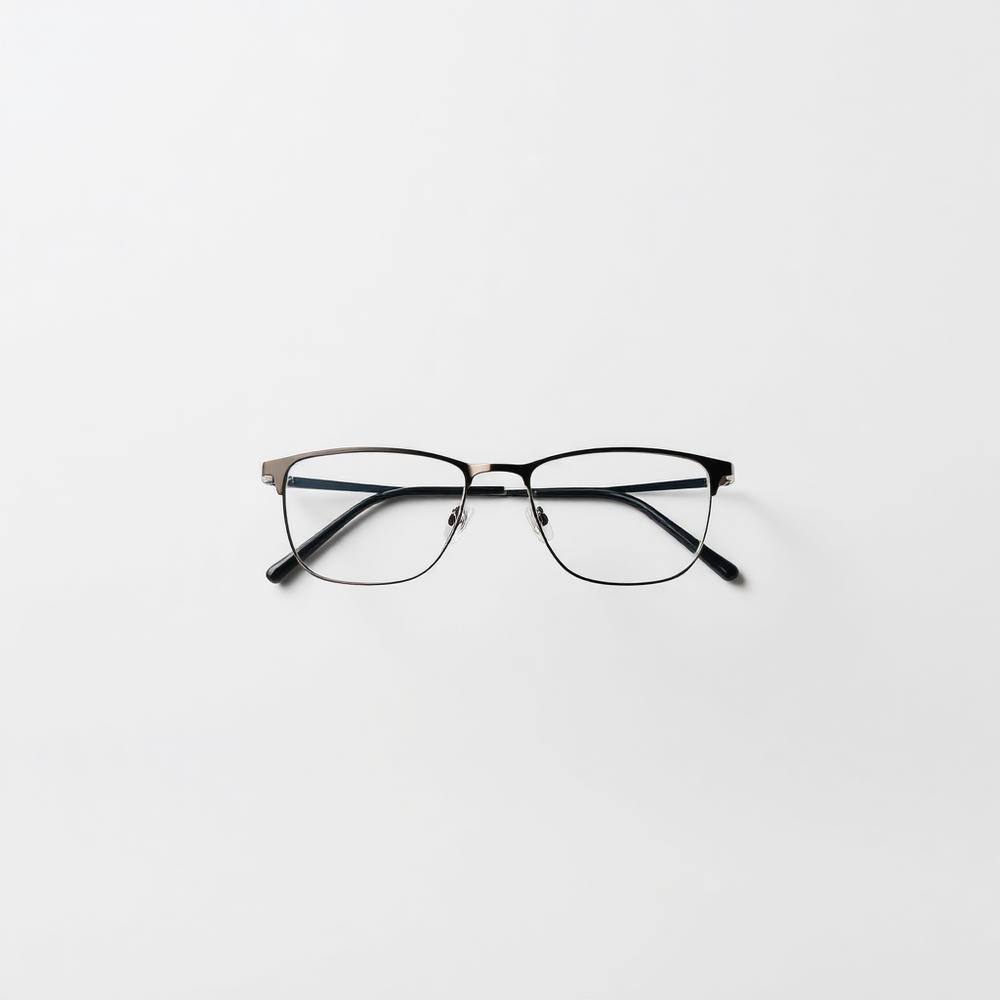
Single Vision
Single-vision lenses provide one prescription throughout the lens, correcting nearsightedness, farsightedness, or astigmatism at a specific viewing distance.
Bifocal & Progressive Lenses
Bifocals have two distinct vision zones, separated by a visible line, for distance and near vision. Progressive lenses provide distance, intermediate, and near vision with a gradual transition between powers and no visible line. Both are commonly prescribed to help manage presbyopia, the age-related change in near focusing ability that typically becomes noticeable in the 40s.
Lens Materials
Standard plastic (CR-39) offers excellent optical clarity and is a lightweight option for many prescriptions. Polycarbonate and Trivex provide increased impact resistance, making them popular choices for children, sports, and safety eyewear.
High-index lenses are designed to bend light more efficiently, allowing stronger prescriptions to be made thinner and lighter.
Coatings & Tints
Anti-reflective coatings reduce glare and reflections, improving visual comfort and clarity, particularly during night driving and prolonged screen use.
Photochromic lenses automatically darken when exposed to UV light and return to a clear state indoors.
Blue-light filtering lenses are available to help alleviate digital eye strain. Healthy habits, such as regular breaks and the 20-20-20 rule can be helpful.
Sources
- American Academy of Ophthalmology: Glasses and contacts
- American Optometric Association
- Canadian Association of Optometrists
General information only.